


When the ultrasound report says gallbladder sludge, it means material containing small crystals, components of bile and mucus. Ultrasound sees this as clustered particles within bile instead of uniform, dark fluid. Sludge settles in the part of the gallbladder and moves when the position of the body changes and does not cast a clear shadow. But gallstones have a different appearance; they are a bright focus that moves when there is a change in position and casts a shadow because their structure blocks the beam of ultrasound. In research, the term microlithiasis is used to separate gallbladder sludge vs. gallstones by defining microlithiasis as bright 5mm calculi with shadowing and the sludge as bright material without shadow.
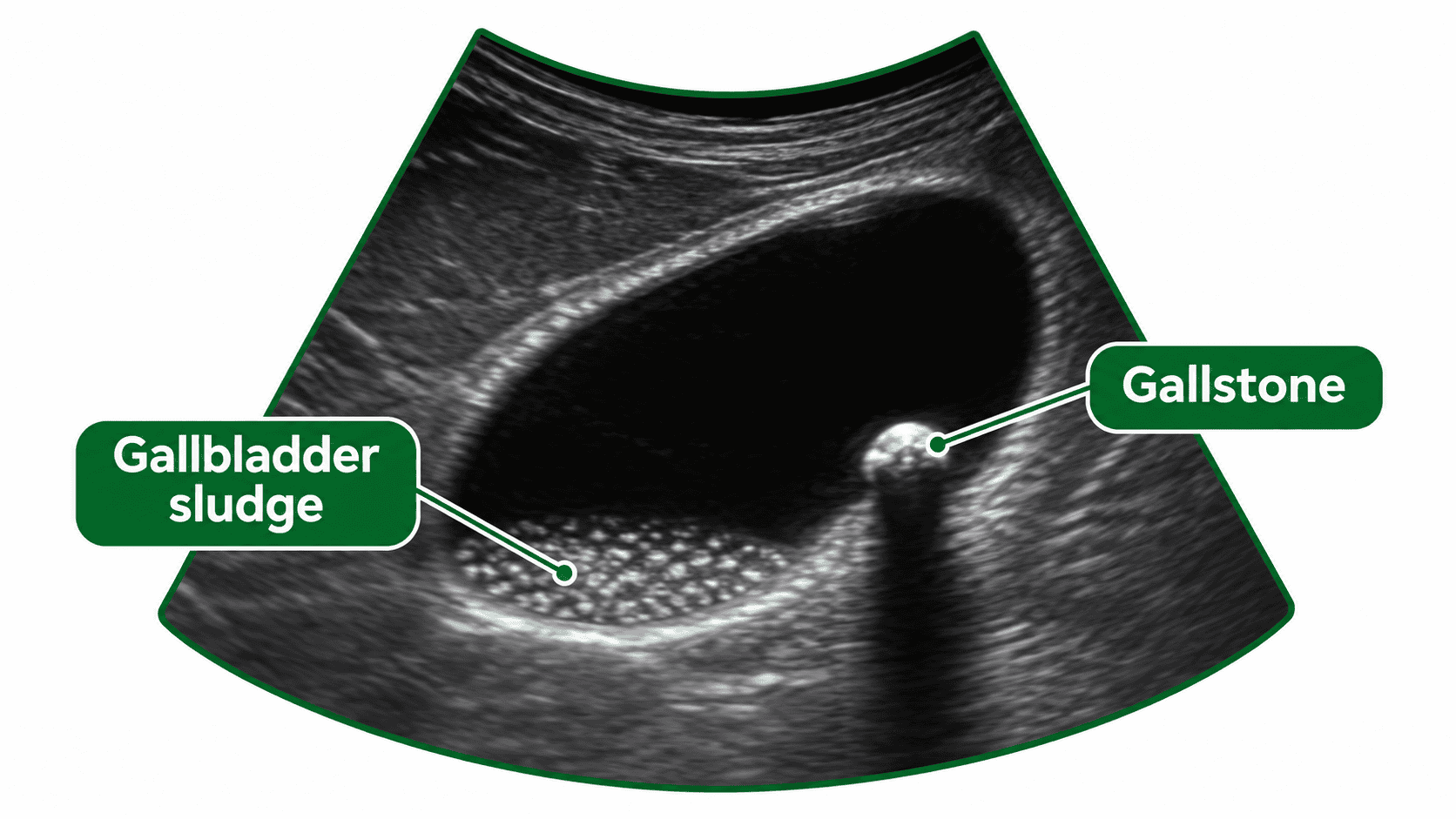
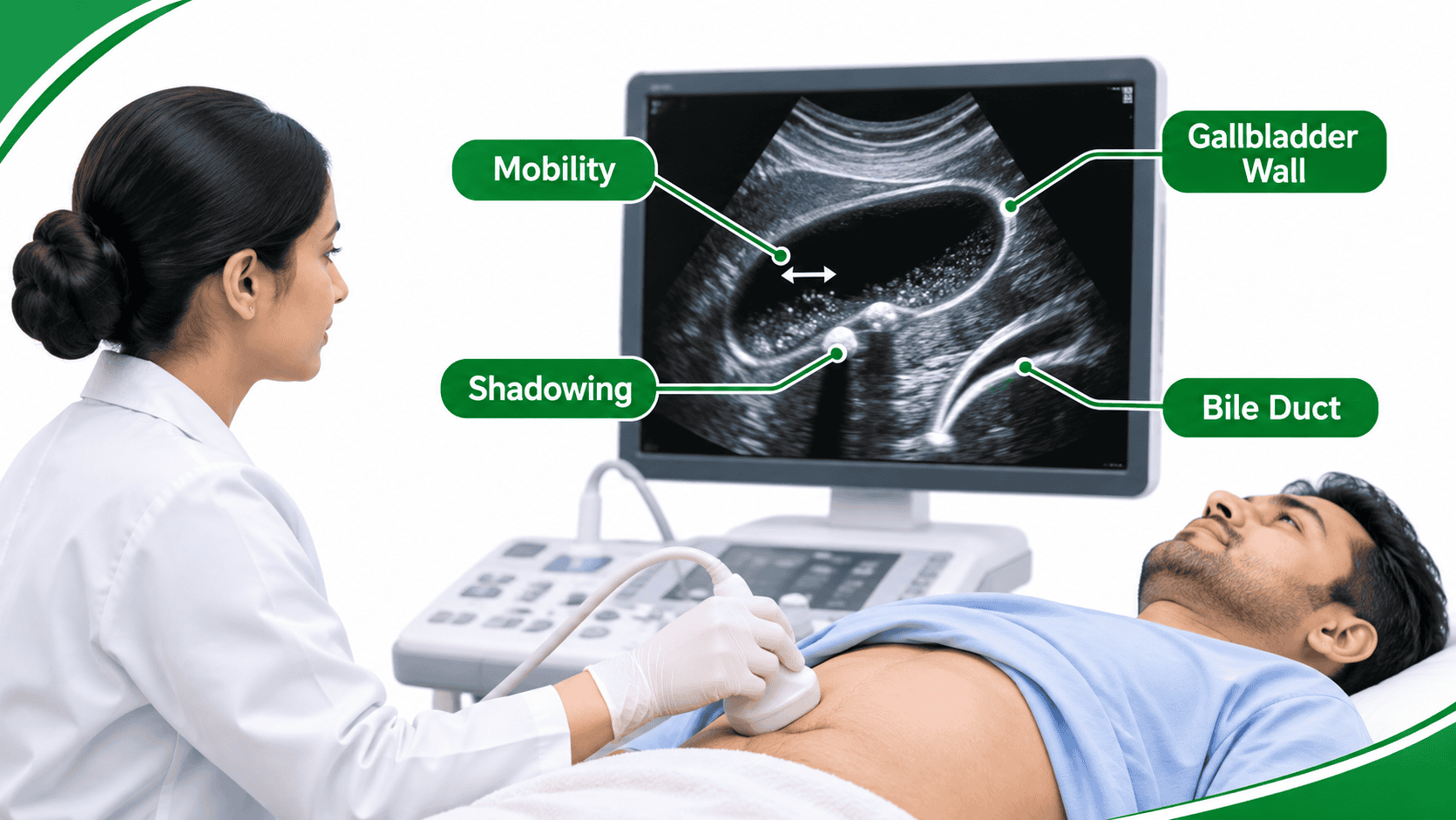
This difference is a useful but not accurate equation in every image. Maybe a small stone is not able to produce a shadow, but the sludge may resemble a mass. The quality of examination depends on bowel gas, preparation, body position and operator technique. A report describes mobility, location, shadowing, gallbladder wall and bile duct instead of depending on a single word ” sludge”.
How ultrasound makes the difference between sludge and stone
The examiner not only describes the brightness level. They also look for patterns, movement when there is a change in position or casting a shadow. Along with the brightness level, they also focus on wall thickness, gallbladder distension, focal tenderness, and surrounding fluid under the bile duct calibre. These findings are interpreted with symptoms and are more useful than isolated signs.
Usually, ultrasound is the starting test because no radiation is used in it, and it visualises gallbladder sludge and stones well in many situations. It cannot determine the chemical composition of sludge or ensure the detection of every single stone.
If a report says sludge, then it may be an honest statement of image limitation instead of an error. Comparing the earlier scan, reviewing the actual image or repeating the examination under suitable conditions can help when the results alter clinical decisions. When duct stones are not shown by the ultrasound, but the bile duct is dilated, consider the ultrasound when MRCP remains non-diagnostic. Those choices address the duct stones, and simple sludge doesn’t mean everyone needs an MRI.
Sludge on MRI vs ultrasound
Ultrasound is the first test for stones or sludge. MRI images the bile ducts without an endoscope and is considered when stone disease is suspected, not for sludge detection in ultrasound reports. Generally, MRI can miss sludge and tiny stones inside the gallbladder, so MRI does not rule out sludge.
A review of unexplained pancreatitis found that sludge and microlithiasis are identified more accurately on MRI, as it describes
the cases seen after ultrasound.
Can sludge become gallstones or disappear?
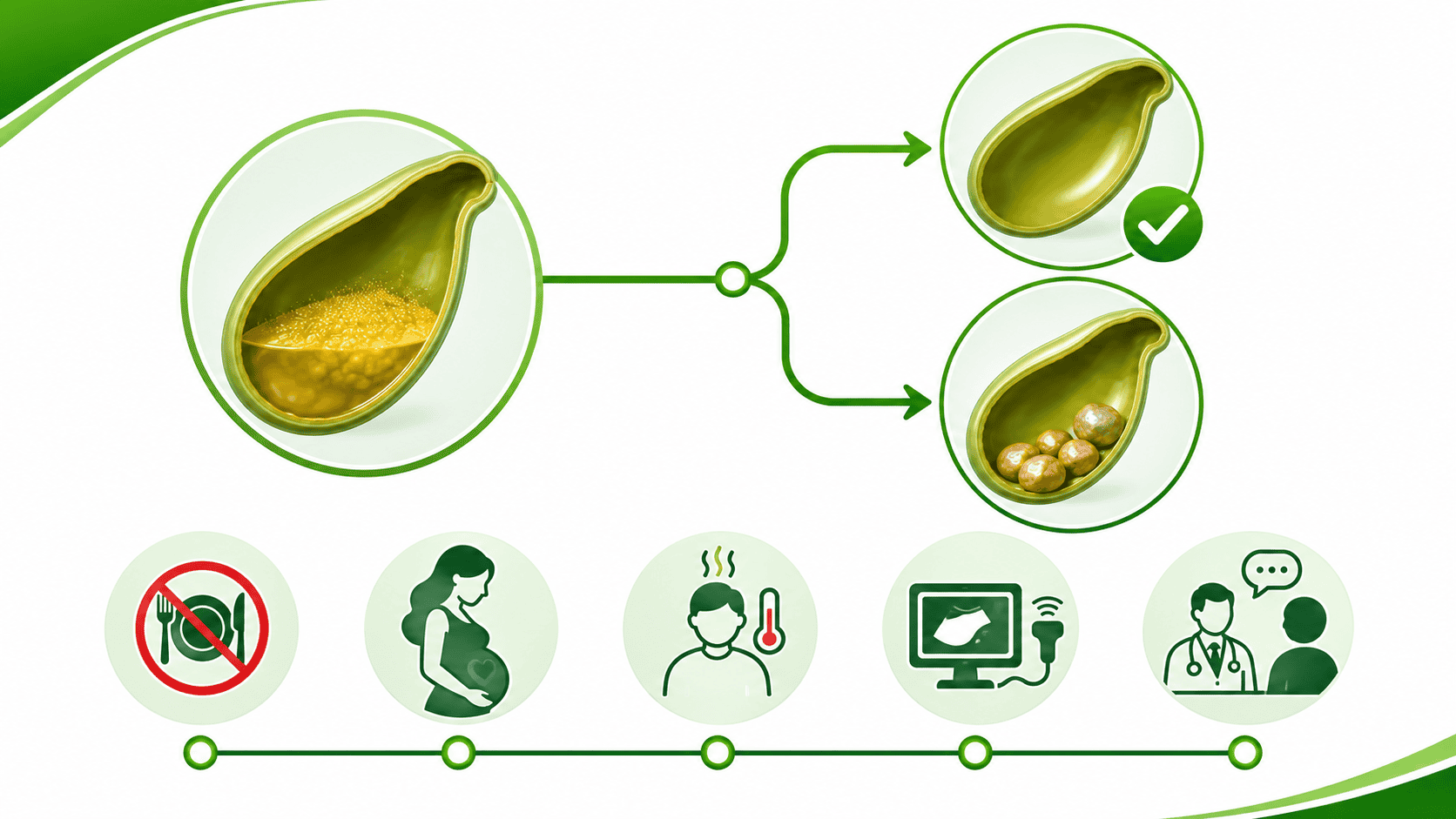
The course of sludge varies and can disappear when a temporary trigger improves, but sometimes remains present and converts into gallstones. Follow-up reviews and studies do not provide one outcome that is suitable for everyone. This describes the image at the time of the scan; the single word is not able to predict what happens later in the month or year.
Poor gallbladder function can encourage sludge formation. This has been described with fasting, pregnancy, total nutrition, unexpected weight loss, critical illness and some medical conditions. Having one of these factors will not prove that sludge can cause the problem and should not be considered a reason to stop the prescribed medicine by health care experts.
Symptoms, clinical reviews, weight change, pregnancy and illness can indicate that temporary drivers need follow-up or medical attention. Small size does not always make the findings harmful. Microthialis and sludge can remain asymptomatic, but in some cases they can be associated with gallbladder inflammation, biliary colic and pancreatitis or ducts.
Alternatively, an incidental report without inflammation, compatible pain or abnormal tests does not automatically become an active disease.
Conclusion
Understanding the ultrasound report is the first and important step to manage gallbladder health in an effective way. Both the conditions sludge and gallstones indicate cholesterol is concentrating in digestive fluid. Gallbladder sludge represents particle-rich fluid, and gallbladder stones are the formation of solid masses. Recognising the difference between both conditions helps to understand the symptoms and the next step to proceed. Whether your report shows minor sludge or a stone, you can consult with specialists like Dr. Charnbir Singh at RG Stone Urology & Laparoscopy Hospital without delay. They help manage both conditions by providing complete information about dietary changes after complete observation and providing complete medical care according to the condition.
FAQ’S
What is the key difference between gallbladder sludge and stone?
Gallbladder sludge is the thick bile that appears in the lower part of the gallbladder, and a gallbladder stone is a hard deposit that appears on the screen.
What are the causes of gall bladder sludge?
The main causes of sludge formation are calcium salts, cholesterol crystals and mucus.
What other details are mentioned by the ultrasound report?
Ultrasound reports mention details about the bile duct, gallbladder wall and sonographic Murphy’s sign.
When does gall bladder stone require surgery?
Gallbladder stones require surgery when you experience painful attacks and inflammation

